 ESPCI web site





Research
PMMH’s research is organized around three main axes that reflect the laboratory’s identity: Physical Hydrodynamics, Physical Mechanics, and between them, a Soft Matter that is emblematic of ESPCI’s interdisciplinary approach:
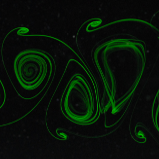
Physical Hydrodynamics and Interfaces: This axis encompasses turbulence and instabilities, flows at both low and high Reynolds numbers, wetting phenomena, waves, and fluid-structure interactions. From bacterial swimming to sea foam formation, our research combines experimental, theoretical, and numerical approaches to understand flow phenomena across scales.
More info on:
Hydrodynamic instabilities | Flow Control | Surface waves
Phase transitions and interfaces | Microhydrodynamics | Wetting and non-wetting phenomena | Biomimetics and Fluid-Structure Interaction
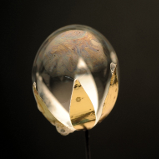
Soft Matter and Biophysics: At the intersection of fluid and solid mechanics, our soft matter research explores active matter, from single cells to tissues, complex suspensions, and the physics of materials that defy simple classification. This theme embodies ESPCI’s tradition of studying materials at the boundary between physics, chemistry, and biology.
More info on:
Active fluids | Low Re fluid-structure interactions | Elasto-capillarity |
Cell Biophysics | Acoustofluidics | Tissue biophysics

Physical Mechanics and Statistical Physics: This axis addresses slender structures, disordered solids, growth phenomena, and the mechanical behavior of heterogeneous media. From root growth mechanics to ice sheet fracturing, we study how materials respond to forces and deformations, combining precision experiments with physical modeling.
More info on:
Bio-mechanics and plant root growth | Erosion, transport and morphodynamics | Mechanics and geometry of thin plates | Nonequilibrium interfaces and glassy systems | MechaPhys: Fracture and plasticity of disordered materials | Dense active matter
Two transverse themes have consolidated across PMMH, connecting our three core axes and opening new research subjects:
Physics for Living Systems: Combining approaches from hydrodynamics, soft matter, and mechanics, several projects in the lab today address fundamental questions in biophysics: cell biomechanics, swimming microorganisms, macroscopic animal swimming and flying, tissue mechanics, and root growth.
Physics for the Environment: From cloud formation and dewdrop nucleation to sea foam dynamics and ice sheet behavior under wave forcing, this axis applies our core competencies to pressing environmental questions. Field work now complements our traditional table-top experiments and theoretical modeling.


